Garage Floor Epoxy San Antonio — Built for Military-City Trucks & Clay Slabs
This is a working-vehicle town — daily-driven trucks for the JBSA gate run, weekend toys for the River Walk crowd, project rigs out near the Toyota and supplier plants on the South Side. The slab under all of them sits on the expansive clay that defines South-Central Texas, and it bakes through a 100°F-plus summer. We bridge the clay-driven cracks first, then lay a hot-tire-proof flake or metallic coat that laughs off oil, brake fluid, and gear-grease. One- and two-car bays usually finish in a single day.
A Garage Floor Sized to How San Antonio Actually Lives
Few cities work their garages the way San Antonio does. A retired senior NCO near Fort Sam keeps the same truck he drove on base. A Toyota line worker on the far South Side parks a project car next to the toolbox. A River Walk bartender's weekend motorcycle shares the bay with a kayak and a second fridge for game day — because almost no home here has a basement, so the garage absorbs everything. Whatever rolls in, it lands on the same problem underneath: a slab poured over the expansive clay that runs from the West Side out to the Hill Country, finished hard and slick at pour, and never built to be the floor of a usable room. A coating is what converts that raw concrete into one.
Start with the cracks, because the clay guarantees them. It swells with every spring storm off the Balcones Escarpment and shrinks bone-dry through the drought months, and the slab flexes along for the ride — the hairline cracks and lifted control joints you see in nearly every garage from Helotes to Schertz are seasonal movement, not a contractor's mistake. Lay a coating straight over them and they ghost back through by the next August. So our crew routes and packs every one with a flexible polyurea before any color goes down; that is the step that separates a floor that lasts from one that telegraphs its repairs.
Heat is the second test, and it is the one a military-city fleet punishes hardest. A closed garage off Loop 1604 can hold past 100°F for weeks, and a daily-driven truck rolls in on tires hotter still — the exact load that softens hardware-store roll-on kits and lifts them in sheets, the failure installers call hot-tire pickup. We seal every bay under a UV-stable polyaspartic topcoat rated for that radiant punishment, so the floor under a commuter's pickup looks the same after a Texas summer as the day we packed up. The same non-porous surface shrugs off the oil-change drips, transmission fluid, and battery acid a hands-on owner generates — it is the chemistry we run on interior living spaces, built tougher for a vehicle bay.
Because both the clay and the climate fight the coating here, the install sequence is the product. Diamond-grind the slab for a true mechanical key, run calcium-chloride and relative-humidity readings to see what the clay is pushing up, fill the seasonal cracks and joints, prime with a moisture barrier when the numbers demand it, then carry your flake or metallic in a high-solids body coat under polyaspartic. We bring that same routine to garages across the metro and up the I-35 corridor — Schertz, Cibolo, Converse, and Kyle — and into the working commercial shops that keep this town's trucks moving. Real numbers live in the San Antonio pricing guide, with more from Ascent Epoxy San Antonio.
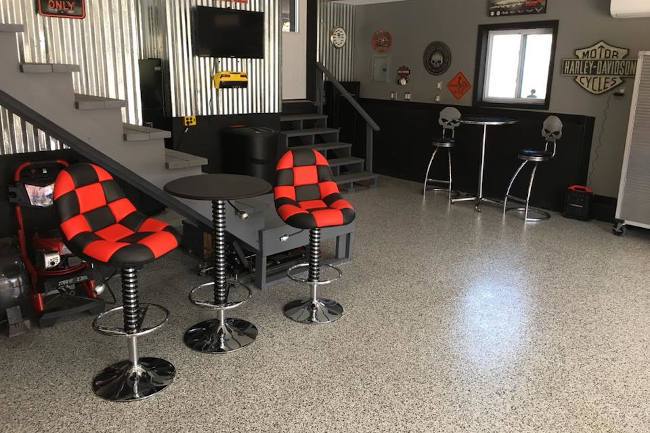 Before
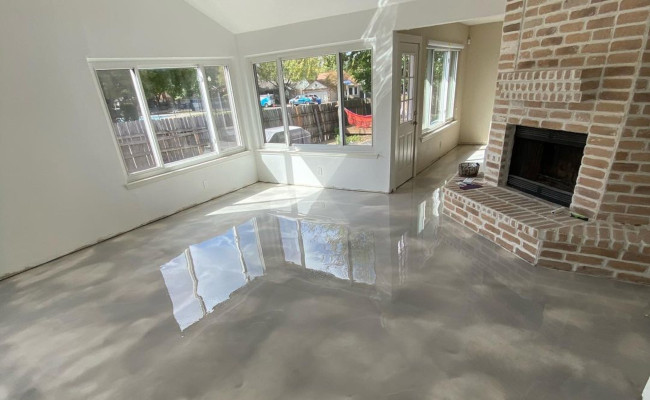 After
After
Six Reasons San Antonio Owners Coat the Bay
From a base-bound daily driver to a South Side project rig, here is what a sealed flake or metallic floor does that raw concrete on Texas clay never will.
200°F
No Hot-Tire Pickup
A commuter pickup back from the I-35 grind drops tires hotter than the 100°F-plus bay they cool down in. That heat is what peels cheap kits; our polyaspartic topcoat is rated for the radiant load, so it stays bonded instead of lifting in patches.
Why Texas heat matters →0 stains
Spills Wipe, Don't Soak
Whether you wrench on your own rig or just change the oil yourself, the drips, transmission fluid, brake dust, and battery acid bead on a non-porous surface — instead of soaking into open concrete the way they would on a bare slab and setting as permanent stains.
Safe
Grip When It's Wet
Pull a rain-soaked truck in off a sudden Hill Country downpour and a polished slab turns into a skating rink. Broadcast flake plus an anti-slip additive in the topcoat hold a textured, sure-footed surface you can walk and work on safely.
10–30 yrs
10-30 Year Lifespan
On clay that shifts with every wet-and-dry cycle, the prep is what buys the decades. Bridge the seasonal cracks, verify the slab moisture, and seal the flake under polyaspartic, and a San Antonio bay holds 10 to 30 years before it needs a recoat.
How humidity affects durability →5 min
5-Minute Maintenance
Sweep the cedar pollen and caliche dust, run a mop, done — no resealing, no rewaxing on the calendar. A seamless coat gives South Texas grit no pores or joints to lodge in, which is exactly where bare concrete traps it for good.
Move-in ready
Shows Better on Listing Day
In a town where PCS orders and job moves put homes on the market constantly, a finished garage signals a cared-for property. A glossy flake floor photographs well and answers the "I'll have to redo this concrete" objection before a buyer ever voices it.
See full pricing guide →How a San Antonio Bay Gets Done — Five Steps
The two steps a discount crew skips — reading slab moisture and treating the clay-driven cracks — are the two a Texas slab can't go without. Here is the sequence we run on every bay, no shortcuts.
Free Consultation
~45 minOur installer meets you at the bay, measures the space, and reads the slab — where the clay has worked cracks in, how far the joints have drifted, and which flake or metallic finish suits how you use the garage. You leave with a written quote, never a phone guess. Schedule yours free.
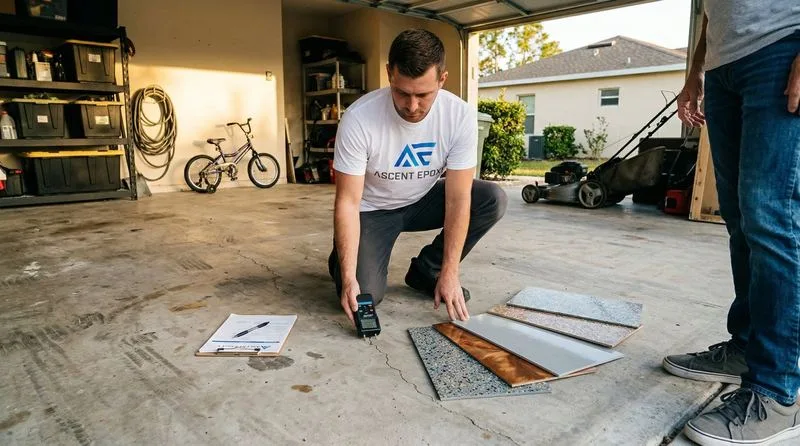
Surface Preparation
2–4 hrsDiamond grinding opens up the slick mill-finish on the slab so the coating keys mechanically into the concrete rather than just sitting on it. Next come calcium-chloride and relative-humidity readings — the number that tells us whether the clay underneath is driving vapor up faster than an untreated coat could ever survive.
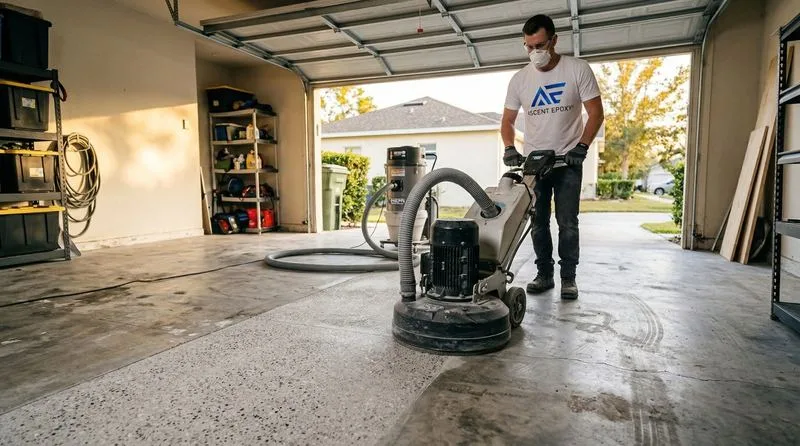
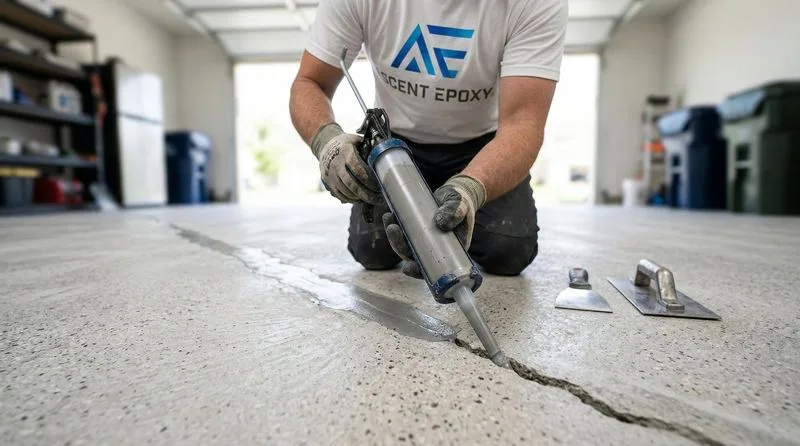
Crack & Joint Repair
30–60 minThis is where a San Antonio job is won or lost. Every clay-driven crack, spall, and control joint gets routed open and packed with a semi-rigid polyurea filler that moves with the slab through the wet-dry season instead of snapping — so the lines you see today stay buried instead of reappearing through the finish next summer.
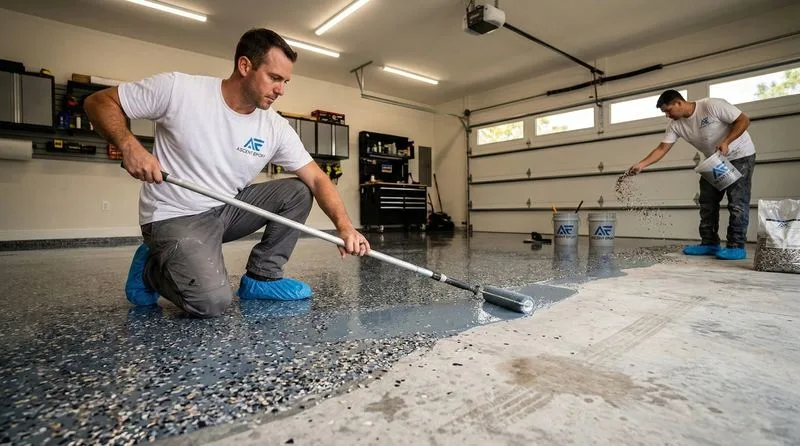
Multi-Coat Application
3–5 hrsWhen the readings call for it, a moisture-mitigating primer lays down first to block the vapor coming up out of the clay. On top of that goes a high-solids epoxy body coat carrying your broadcast flake or metallic finish, all locked in under a UV-stable polyaspartic topcoat engineered for hot tires and Texas heat.
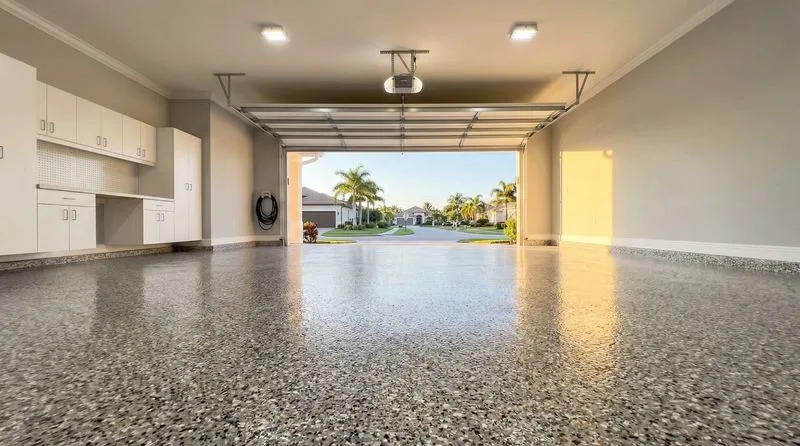
Cure & Enjoy
5–7 daysFoot traffic is fine within 24 hours; back the truck in after the 5-to-7-day cure — the polyaspartic handles hot tires from the first day you park. Before the crew packs out, they walk you through the simple care routine and hands you a written warranty.
It Starts With a Free Slab Read.
Your installer checks your clay cracks and joints, lays flake samples down in the bay, and prices it — no obligation.
San Antonio Garages We've Coated
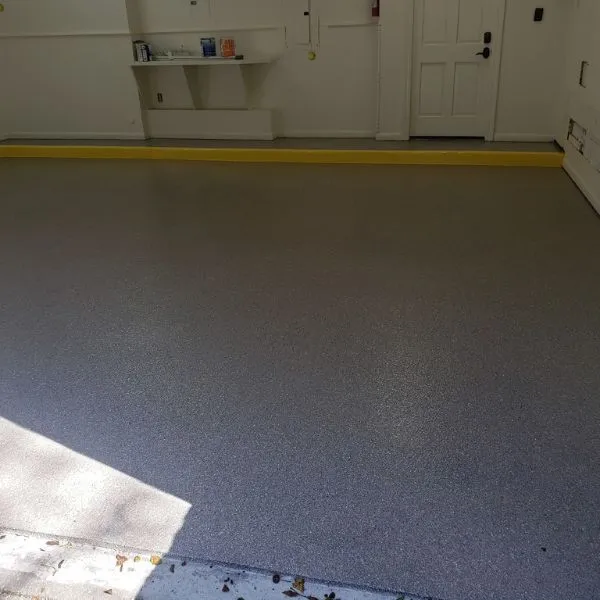
Flake and metallic finishes on real metro slabs — from inside-loop bungalows to far-flung Hill Country shops and base-area driveways. Not a stock photo in the set.
Rated 5.0★ — San Antonio Reviews
What metro-area owners say once they've parked on the floor through a Texas summer — verified on Google.
"I hired Ascent Epoxy San Antonio to redo my garage and I'm impressed. They showed up on time, walked me through each step, and delivered a beautiful, high-gloss floor that's holding up really well under daily wear."
"We had a metallic epoxy floor installed in our shop. It's sleek, durable, and the team was very professional."
"Fast work, clean job, and solid result."
Garage Epoxy FAQs — San Antonio
The questions South-Central Texas owners ask us most before coating a garage floor — answered straight.
Garage floor epoxy in San Antonio typically costs $5 to $12 per square foot, depending on the coating system and surface condition. For a 1-car garage, expect to pay $1,000 to $3,000. A standard 2-car garage runs $2,000 to $6,000. Factors that affect pricing include the amount of crack repair needed, whether moisture mitigation is required, and which coating system you choose (solid color, decorative flake, or metallic). See our full San Antonio pricing guide for detailed breakdowns.
San Antonio's average 74% relative humidity makes moisture testing and proper surface preparation critical for a lasting garage epoxy floor. Excess moisture trapped in the concrete slab can cause epoxy coatings to bubble, peel, or delaminate within months of installation. Professional installers use calcium chloride testing and in-situ relative humidity probes to verify that slab moisture levels are within acceptable ranges before applying any coating. When moisture levels are elevated, a moisture-mitigating primer is applied first to create a vapor barrier between the slab and the epoxy system.
Garage epoxy floors in Texas last 10 to 30 years when installed with proper surface preparation and moisture testing. The wide range depends on the coating system used, the quality of prep work, and how the garage is used. High-solids epoxy base coats paired with polyaspartic topcoats deliver the longest service life because they resist UV yellowing, hot-tire pickup, and chemical exposure better than entry-level systems.
Yes, you can park on your new epoxy garage floor after a 5 to 7 day full cure period. Light foot traffic is typically safe within 24 hours of the final coat, and you can place objects on the surface after 48 to 72 hours. Our professional-grade epoxy and polyaspartic topcoats are specifically formulated to resist hot-tire pickup, so you will not see marks or peeling from parking warm vehicles on the surface.
October through April is the best time to epoxy a garage floor in San Antonio. Lower humidity and cooler temperatures during these months create ideal conditions for epoxy adhesion and curing. Concrete surface temperatures between 50°F and 90°F are optimal for most epoxy systems. Summer installations are still possible but require additional climate control measures, such as dehumidifiers and fans, to manage moisture and heat during the application and cure stages.
Design your garage floor in 60 seconds.
Pick your size, finish, and color. See a real preview and your San Antonio price range before you call.
Open Floor Studio →