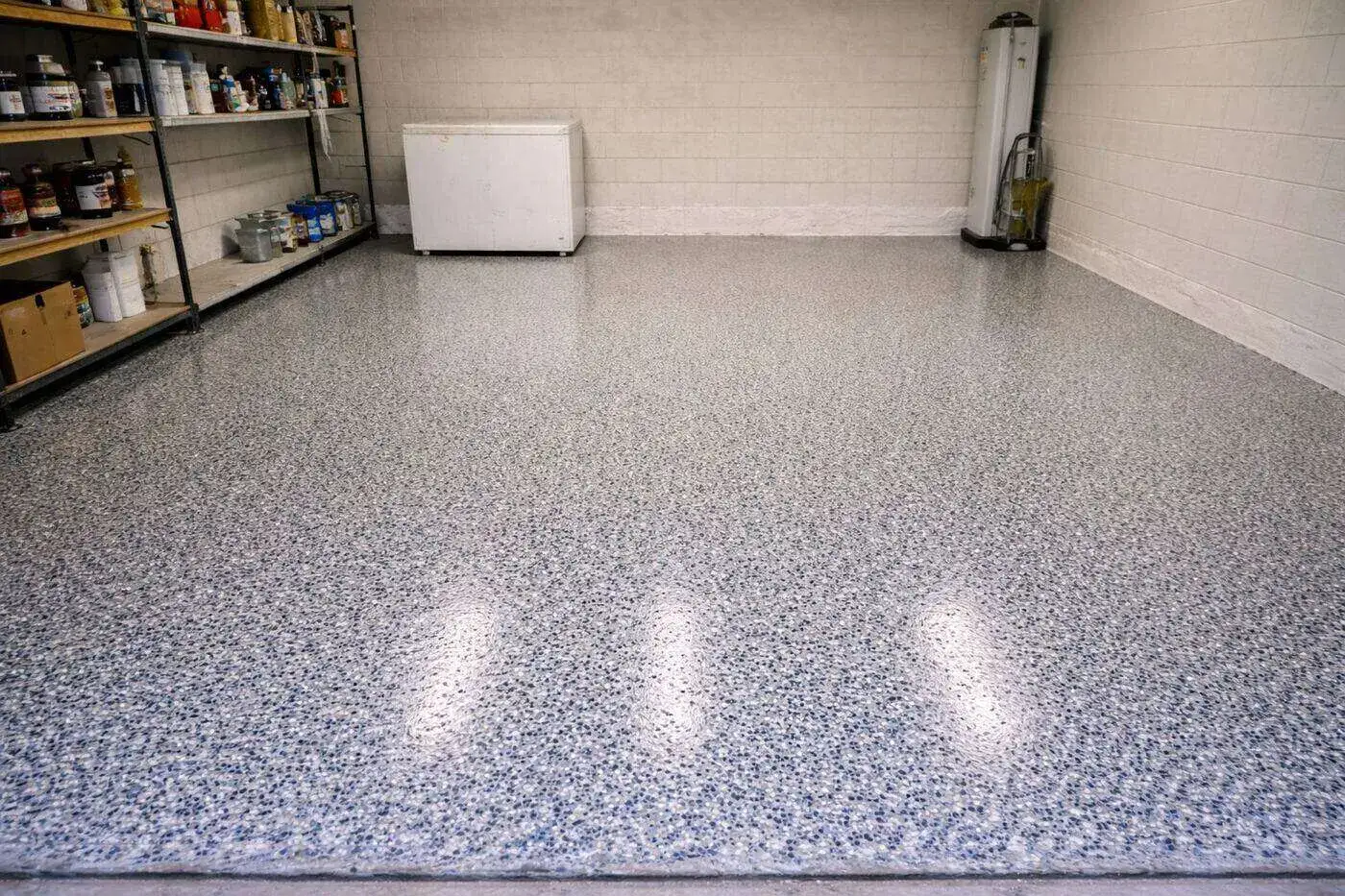
Here is the honest answer most San Antonio contractors won't give you straight: epoxy flooring is absolutely worth it — when it is professionally installed over a sound, properly prepped slab, with real moisture mitigation and a UV-stable topcoat built for Texas sun. Done that way, you get a floor that outlasts the car you park on it.
It is just as honestly not worth it when a bucket from the home-improvement aisle gets rolled over an unground, moisture-laden, or actively moving slab. That floor will peel, yellow, or lift within a season or two — and in our climate, it usually does. The product isn't the deciding factor. The slab underneath it and the prep that goes into it are.
So the real question isn't “is epoxy worth it?” in the abstract. It is “is epoxy worth it for my slab, in this climate, for how long I plan to stay?” This guide walks through the genuine pros, the cons we won't sugarcoat, how epoxy stacks up against the alternatives, and exactly when it pays off across Bexar County and the Hill Country.
The Real Pros of Epoxy in San Antonio
When epoxy is done right, the upsides are not marketing fluff — they are the reasons garages in Stone Oak, Schertz, and Fair Oaks Ranch keep choosing it over bare concrete.
Durability that actually earns its keep
A professional flake-and-polyaspartic floor is engineered to take abuse: dropped tools, rolling jacks, foot traffic, and the weight of a loaded truck. Where bare concrete dusts, chips, and stains, a bonded epoxy system holds up for 10 to 20-plus years. That lifespan is the entire reason the upfront cost makes sense — you are buying a decade-plus of floor, not a weekend project.
Hot-tire, oil, and chemical resistance
San Antonio garages get hot. When you pull a truck in after a summer drive on I-35, the tires are hot enough to pull a cheap coating right off the slab — that is “hot-tire pickup,” and it is the number-one killer of bargain floors here. A real polyaspartic-topped system resists it. The same coating shrugs off oil drips, brake fluid, pool chemicals, and the road grime that would otherwise soak into porous concrete forever.
It wipes clean instead of staining
A finished epoxy floor is non-porous. Spills sit on top and mop up; they don't sink in. For a working garage, a home gym, or a patio in Boerne, that means a quick wipe instead of a permanent stain. Anyone who has tried to scrub an oil spot out of raw concrete knows exactly how much that is worth.
Looks, usable space, and home appeal
A flake or metallic finish turns a dim, dusty garage into a clean, bright room you actually want to use — a workshop, a gym, a hangout. That reclaimed square footage is real, and it reads to buyers in Alamo Heights and New Braunfels as a home that has been cared for. Epoxy is a finish detail that helps a listing stand out, even if it is not a guaranteed dollar-for-dollar return.
UV-stable topcoats made for Texas sun
Standard epoxy ambers and chalks under UV — a real problem on a sun-blasted patio or a garage with the door open all day. The fix is a UV-stable topcoat, usually polyaspartic, layered over the epoxy base. With that topcoat, the color holds in our intense Edwards Plateau sun. Without it, even a good floor fades. This is exactly the layer cheap installs skip, which is why so many San Antonio garages have that yellowed, dated look.
The Candid Cons
We would rather you hear these from us than discover them after a deposit. Epoxy is not magic, and there are real reasons it might not be the right call.
Higher upfront cost than paint
A professional flake system for a 2-car garage costs far more than a bucket of concrete paint. That gap is real. The reason it is worth it is lifespan — paint lasts a year or two here, epoxy lasts a decade-plus — but if your budget genuinely tops out at the price of a paint can, epoxy is not in reach this year, and that is a fair reason to wait.
It lives and dies on prep
Epoxy is only as good as the bond underneath it. That means diamond-grinding the slab, opening the concrete's pores, repairing cracks, and testing for moisture before a drop of coating goes down. Skip the prep and even premium product fails. This is why two “epoxy floors” at wildly different prices are not the same purchase — the cheap one almost always cut the prep.
The slab has to be sound — epoxy won't fix a failing one
A coating is a finish, not a structural repair. If your San Antonio slab is actively heaving or separating because of expansive-clay foundation movement, epoxy will simply crack again along the same line. It hides the problem for a while; it does not solve it. A slab that is breaking up needs to be assessed and stabilized first.
It can be slippery when wet
A smooth, glossy epoxy floor gets slick with water — relevant for a patio, a pool deck, or a garage that sees rain blowing in. The fix is easy: a broadcast anti-slip additive in the topcoat. But it has to be specified up front, and a bargain install rarely thinks about it.
Cheap installs fail — and they fail loudly
The single biggest reason people think epoxy “isn't worth it” is that they saw a neighbor's bargain floor peel within a year. That was not epoxy failing; it was a no-prep, no-moisture-test, no-UV-topcoat job failing exactly as it was always going to. Judge epoxy by a properly installed floor, not by the cheapest quote in the neighborhood.
Not Sure If Your Slab Is a Candidate?
We'll assess your concrete, check for moisture, and tell you honestly whether epoxy is worth it for your space — free, no pressure.
Epoxy vs. the Alternatives
Epoxy is not your only option for a San Antonio garage or patio. Here is how the realistic alternatives compare on price, lifespan in our climate, and what each is actually best at.
| Option | Relative Cost | Lifespan in SA | Best For | Watch-Out |
|---|---|---|---|---|
| Epoxy / Flake System | Moderate | 10 – 20+ years | Residential garages, patios, home gyms | Needs a UV-stable topcoat or it ambers in the sun |
| Polyaspartic | Moderate to higher | 15 – 20+ years | Fast turnaround, hot installs, max UV stability | Cures fast — demands an experienced crew |
| Polished Concrete | Low to moderate | 10 – 20+ years | Modern look, low maintenance, big floors | No color/flake options; needs a hard, sound slab |
| Concrete Sealer / Paint | Lowest | 1 – 3 years | Rock-bottom budget, short-term/rental fixes | Hot-tire pickup; peels and re-coats constantly |
| Tile | Higher | 15 – 25+ years | Interior rooms, decorative finishes | Grout stains; cracks if the clay slab moves |
The pattern is clear: at the bottom, sealer and paint are cheap but short-lived in our heat. In the middle, epoxy, polyaspartic, and polished concrete all deliver a decade-plus — they mainly differ on looks and cure speed. Tile lasts but is vulnerable to the same clay movement that stresses every slab in Bexar County. For most garages and patios, a flake-epoxy floor with a polyaspartic topcoat hits the best balance of price, durability, and finish.
When Epoxy Is Worth It
Epoxy is an easy yes when these line up:
- Your slab is sound. No active heaving or separation — just normal concrete that can be ground, repaired, and coated. Hairline shrinkage cracks are fine; they get filled.
- You'll be in the home 3+ years. The cost spreads across a decade-plus of life, so the longer you stay, the more obviously it pays off.
- You want low maintenance. If you are tired of sweeping concrete dust and scrubbing stains, a non-porous floor you can mop is worth real money in saved hassle.
- You have heat and UV exposure handled by the topcoat. A hot garage or a sun-exposed patio in Helotes or Bulverde is exactly where a UV-stable polyaspartic topcoat earns its premium.
- You want the space to do more. Turning a garage into a usable gym, shop, or hangout — or making a patio feel finished — is where the “adds usable square footage” benefit is real.
In these cases, a professional flake system for a 2-car garage is a sound, long-horizon purchase, not an indulgence.
When It Is NOT Worth It
We will talk you out of it when any of these are true:
- The slab is actively failing. If your concrete is heaving, sinking, or separating from clay-driven foundation movement, spend the money on the slab first. A coating over a moving slab just cracks again.
- You're renting or selling short-term. If you'll be out within a year or two, you won't capture the lifespan that justifies the cost. A cheaper sealer, or leaving the floor alone, is the smarter play.
- You're chasing the rock-bottom number. If the goal is the cheapest DIY kit on the shelf, understand you are buying a floor that lasts 6 months to 2 years here. That is not “cheap epoxy” — it is a temporary coating that will cost you again soon. Either budget for a real system or skip it for now.
None of these mean epoxy is bad. They mean it is the wrong purchase for that situation — and we would rather tell you that than sell you a floor you'll regret.
The San Antonio Verdict
San Antonio is, in some ways, the perfect place for epoxy — and the perfect place for it to fail. We sit on expansive Edwards Plateau and Blackland Prairie clay that swells and shrinks with every wet-dry cycle, stressing slabs and driving moisture vapor up through the concrete. We get roughly 122 days a year above 90°F and intense, year-round UV. Every one of those conditions is exactly what punishes a cheap, no-prep, no-topcoat floor.
But those same conditions are why a properly built epoxy floor is such a strong value here. Moisture mitigation handles the vapor. Flexible crack repair handles the clay movement. A UV-stable polyaspartic topcoat handles the sun. A non-porous surface handles the heat that turns spills into permanent stains on bare concrete. The climate that destroys bargain floors is precisely the climate a professional system is engineered for.
So the verdict: in San Antonio, epoxy flooring is worth it when you respect the slab and the prep — sound concrete, real moisture mitigation, flexible crack repair, and a UV-stable topcoat. Cut those corners and you are not buying a floor, you are renting a season of one. If you want a straight read on whether your specific slab is a candidate, call (210) 899-0609 or request a free quote online — we'll tell you honestly either way.
Frequently Asked Questions
Is epoxy flooring worth it for a San Antonio garage?
For most San Antonio garages, yes. A flake-and-polyaspartic system shrugs off hot-tire pickup, oil drips, and the heat that pours into a Bexar County garage all summer, and it wipes clean instead of staining. The catch is the slab: if your concrete is sound and properly prepped, a floor that lasts 10 to 20-plus years is worth it. If the slab is actively cracking or heaving, fix that first.
Is epoxy worth it over just painting the concrete?
Almost always. A bucket of concrete paint costs less up front but it sits on the surface, scratches, and lifts under hot tires within a year or two in San Antonio's heat. A real epoxy or flake system bonds into a diamond-ground slab and is built to take traffic, chemicals, and UV. You pay more once instead of repainting every couple of years.
Does epoxy flooring add value to a San Antonio home?
It adds appeal more reliably than dollar-for-dollar resale value. A clean, finished garage or patio floor reads as a maintained, move-in-ready home to buyers in Stone Oak, Alamo Heights, and the Hill Country, and it turns a garage into usable square footage. It is a feature that helps a listing stand out, not a guaranteed return on its own.
Is a DIY epoxy kit worth it in San Antonio?
Rarely, for our climate. A retail kit skips moisture mitigation and uses a water-based coating with no UV-stable topcoat, so it typically lasts 6 months to 2 years before it peels or yellows in the heat. If you want a floor that lasts, the prep and the topcoat are exactly what the kit leaves out, and those are what fail here first.
Is epoxy worth it if my slab has cracks?
It depends on why it cracked. Hairline shrinkage cracks are normal on San Antonio clay and can be cleaned out and filled with a flexible polyurea before coating, so epoxy is still worth it. But if the slab is actively heaving or separating from foundation movement, a coating only hides the problem until it cracks again. Have the slab assessed before you spend on a finish.
How long before epoxy flooring pays off in San Antonio?
If you plan to stay at least three years, it pays off comfortably. A professional flake floor lasts 10 to 20-plus years, so the cost spreads to roughly the price of a repaint or two while you get a surface that never needs resealing. For a short-term rental or a home you are about to sell, the math is tighter and a cheaper sealer may make more sense.
Related Articles
Epoxy Flooring Cost in San Antonio: What Sets Your Price (2026)
What sets the price: system type, garage size, and the local prep our clay and climate demand.
Epoxy vs. Polyaspartic Flooring in San Antonio: Which Is Right for You?
Compare cost, durability, cure time, and UV stability for San Antonio garage and residential projects.