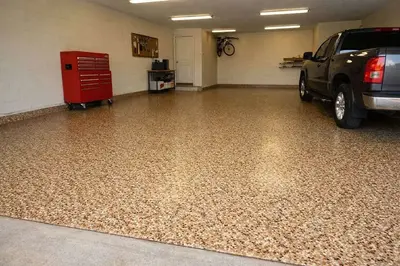
Here is the short answer most San Antonio homeowners are looking for: a professionally installed epoxy or flake floor lasts roughly 10 to 20 years in a home, and 5 to 10 years in heavy commercial or industrial use, while a cheap DIY kit or an under-prepped job fails in 1 to 3 years — sometimes in a single summer. The product on the can matters far less than three local realities: how much our expansive clay slabs move, how much heat and UV the floor takes, and whether the concrete was actually prepped before a drop of coating went down.
In other words, two "epoxy floors" in the same Stone Oak garage can have wildly different lifespans. One was diamond-ground, crack-repaired, moisture-tested, and finished with a UV-stable topcoat. The other was rolled out of a big-box kit over a swept slab on a 98°F afternoon. The first is still holding up two decades later; the second is peeling at the door before the next Thanksgiving. This guide breaks down the real numbers by system, what eats years off a floor here specifically, and what we do to push a San Antonio floor past the 20-year mark.
Typical Lifespan Ranges
Lifespan is best thought of as a range, not a single number, because it depends on use and on prep. For a residential garage or interior space — light foot traffic, a couple of vehicles, the occasional dropped tool — a quality professional system lasts 10 to 20 years, and the better flake-and-polyaspartic builds routinely push past 20 with a single mid-life recoat.
In a commercial or industrial setting — forklifts, pallet jacks, steel wheels, chemical spills, around-the-clock traffic — the same chemistry takes a beating, so the practical range drops to 5 to 10 years for the wear coat before it needs renewal. That is not a defect; it is simply far more abuse compressed into far less time. A warehouse floor in a New Braunfels distribution building sees more tire passes in a month than a Helotes garage sees in a decade.
At the bottom end sit the DIY water-based kits and the rushed, no-prep installs. These commonly fail in 6 months to 2 years. They are not "cheap versions of the same thing" — they are a different, thinner product missing the prep and the protective topcoat that make epoxy last. When a floor here dies young, the cause is almost always prep and topcoat, not the calendar.
Lifespan by System
Not every coating is built for the same lifespan. Here is how the common San Antonio systems compare, assuming each is installed over properly prepped concrete — because without that prep, every number below collapses.
| System | Residential Lifespan | Commercial / Heavy Lifespan | Notes |
|---|---|---|---|
| Solid Color Epoxy | 10 – 15 years | 3 – 7 years | Budget-friendly; needs a UV-stable topcoat or it ambers in the sun |
| Full-Flake + Polyaspartic | 15 – 20+ years | 7 – 12 years | The San Antonio workhorse; UV-stable, hot-tire resistant, easy to recoat |
| Metallic Epoxy | 10 – 15 years | 5 – 8 years | Decorative; lifespan depends heavily on the protective topcoat over it |
| DIY Water-Based Kit | 6 months – 2 years | Fails quickly | No real prep or UV topcoat; peels, yellows, or hot-tire-lifts fast |
The pattern is clear: the systems that last longest pair a durable build with a UV-stable wear coat that can be renewed. The full-flake-plus-polyaspartic build earns its "workhorse" status in San Antonio precisely because it balances cost, looks, hot-tire resistance, and a topcoat that shrugs off our sun.
What Shortens Epoxy Life in San Antonio
San Antonio is genuinely harder on a floor coating than most of the country. Several local factors decide whether your floor reaches its potential or dies early.
Expansive-Clay Slab Movement
We sit on Blackland Prairie and Edwards Plateau expansive clay that swells when wet and shrinks when dry. That movement constantly stresses the slab and opens cracks. Epoxy is rigid, so when a slab shifts in Boerne, Bulverde, or New Braunfels, a crack can telegraph straight up through the coating. A floor coated over an untreated, moving slab can start cracking far sooner than its chemistry would otherwise allow.
Moisture Vapor Transmission
Clay holds water, and that water pushes upward as vapor through the slab. When vapor pressure exceeds what the coating bond can hold, the floor delaminates and bubbles — the coating literally lifts off the concrete. This is one of the most common reasons a San Antonio floor that "looked fine" peels a year later, and it is entirely preventable with moisture testing and a mitigation primer.
Heat and UV Exposure
With roughly 122 days a year above 90°F plus intense direct sun, San Antonio punishes any topcoat that is not UV-stable. Standard epoxy topcoats amber, yellow, and chalk under that load. A floor finished with a bare standard epoxy topcoat can look tired and discolored within a couple of summers, even if the layers beneath it are still sound.
Hot-Tire Pickup
Park a hot vehicle on a marginal coating and the warm tires soften and grip the surface; when you pull out, the coating lifts with the tread. Hot-tire pickup is brutal in our climate and is the classic killer of thin DIY and no-prep floors. A properly bonded, hot-tire-rated system resists it; a rushed one does not.
Skipped or Wrong Prep
This is the single biggest lifespan killer. Diamond grinding opens the concrete's pores so the coating can mechanically bond. Acid etching alone — or no prep at all — leaves a slick surface the coating cannot grab, especially with our hard water and caliche mineral deposits in the way. A floor over poor prep is on borrowed time the day it cures.
Coating Green Concrete
The Stone Oak and Boerne-corridor building boom means a lot of brand-new slabs. New concrete needs a minimum of 28 days to cure before coating, and it often carries a curing compound that must be ground off first. Coating "green" concrete too early traps moisture and curing chemicals under the floor, setting up adhesion failure before anyone parks on it.
Want a Floor That Actually Lasts 20 Years?
We diamond-grind and finish every San Antonio floor with a UV-stable topcoat. Call for a free assessment of your slab.
What Extends It
The good news: every one of those failure modes has a counter. The floors that reach 20-plus years here share the same habits, half of them in the install and half in how the floor is treated afterward.
- Diamond-grind prep. Mechanically profiling the slab is the foundation of a long-lasting bond and the one step no quality install skips.
- Flexible crack repair. Filling cracks with a polyurea that flexes lets the repair move with an expansive-clay slab instead of re-cracking the coating above it.
- Moisture testing and mitigation. Testing the slab and, where needed, applying a vapor-mitigation primer stops the delamination that kills floors over our clay.
- UV-stable polyaspartic topcoat. A UV-stable wear coat is what keeps the floor from ambering and chalking through 122-plus days of Texas sun.
- Recoat every 7 to 10 years. Renewing the wear coat before it wears through to the flake is how a single floor stretches past two decades for a fraction of replacement cost.
- Prompt spill and grit cleanup. Wiping spills quickly and sweeping out caliche dust and grit keeps abrasives from sanding down the topcoat under foot and tire traffic.
- Park on cooled tires. Letting tires cool before parking, or laying down mats in the hottest months, takes the edge off hot-tire pickup on a daily-driven garage.
None of these are exotic. They are the difference between a floor that is a one-time investment and a floor you redo every few years.
Residential vs Commercial
The single biggest reason a residential floor outlives a commercial one is simply the load it carries. Understanding the difference helps you choose the right system and set realistic expectations for how long it will last.
Residential
A home garage or interior floor sees light, intermittent traffic: a couple of vehicles, foot traffic, and the occasional project. Tire loads are modest, chemical exposure is rare, and the floor gets to rest most of the day. That gentle duty cycle is why a quality residential flake floor in a San Antonio home comfortably reaches 15 to 20-plus years. For most homeowners across Alamo Heights, Schertz, and the Hill Country, the flake-and-polyaspartic build is the sweet spot of looks, durability, and cost.
Commercial and Industrial
A commercial floor lives a harder life: constant foot traffic, forklifts and pallet jacks with small hard wheels that concentrate enormous point loads, steel-wheeled carts, thermal shock from washdowns, and chemical or food-acid exposure. They still wear faster than a garage floor in calendar terms simply because they absorb so much more abuse per year, which is exactly why commercial lifespans land in the 5-to-10-year range for the wear coat even when the system itself is top tier.
Signs Your Floor Is Wearing Out
A floor rarely fails overnight; it warns you first. Catching these signs early often means a recoat instead of a full tear-out and replacement. Watch for:
- A dull, chalky topcoat. When the once-glossy surface looks flat and powdery, the UV-stable wear coat is thinning and due for renewal before it wears through to the flake.
- Hairline cracks tracing the slab joints. Fine cracks that follow the concrete's control joints or expansion lines signal slab movement coming through — common over our expansive clay.
- Edge peeling or delamination. Coating lifting at the garage door, along walls, or in patches usually means a bond or moisture problem underneath.
- Hot-tire lift marks. Sticky or lifted patches where you park point to a marginal bond losing its grip in the heat.
- Yellowing or ambering. A color shift toward yellow or amber means a non-UV-stable topcoat is breaking down in the sun.
If you are seeing the early signs — dullness, light yellowing — a recoat is usually all you need. If the floor is peeling, delaminating, or lifting, the failed coating has to come off and the slab gets re-prepped. A quick on-site check of adhesion and moisture tells us which path your floor is on, and our repair and maintenance service handles both.
Frequently Asked Questions
How long does an epoxy garage floor last in San Antonio?
A professionally installed flake-and-polyaspartic garage floor in San Antonio typically lasts 15 to 20-plus years, and a solid-color system 10 to 15 years, before it needs a refresh. The deciding factors here are the prep underneath it, a UV-stable topcoat, and how the slab moves over our expansive clay. Cheap DIY water-based kits, by contrast, usually fail in 6 months to 2 years.
Does San Antonio heat shorten epoxy life?
Direct heat itself does not destroy a properly chosen system, but San Antonio's 122-plus days above 90°F do two things: UV light ambers and chalks non-stable topcoats, and hot tires pull at the bond every time you park. A UV-stable polyaspartic or aliphatic topcoat is what keeps the floor from yellowing and lifting, which is why we never finish a San Antonio floor with a bare standard epoxy topcoat.
How often should I recoat my epoxy floor?
Plan on a fresh topcoat every 7 to 10 years for a residential floor, and sooner for a busy commercial space. A recoat is far cheaper than a full replacement because the base and decorative layers stay; you are only renewing the wear surface. Catching a dull or thinning topcoat early, before it wears through to the flake, is what lets a single floor last 20-plus years.
Why did my cheap epoxy floor fail so fast?
Almost always it is prep. A cheap install skips diamond grinding, relies on acid etching alone or no prep at all, and uses a water-based retail product with no UV-stable topcoat. Over a San Antonio clay slab with moisture vapor moving through it, that coating has nothing to grip and nothing to protect it, so it peels, bubbles, or chalks within months. The product was never the main problem; the missing preparation was.
Does epoxy crack when the slab moves?
It can. Epoxy is rigid, so when an expansive-clay slab shifts in San Antonio, Boerne, or New Braunfels, the coating can mirror a crack that opens beneath it. The fix is flexible crack repair with a polyurea filler during prep, which moves with the slab instead of fighting it. Honoring the slab's control joints rather than coating straight over them also keeps a moving crack from telegraphing across the whole floor.
Can an old epoxy floor be restored instead of replaced?
Often, yes. If the existing coating is still well bonded and the wear is limited to a dull or scratched topcoat, we can scuff-sand and recoat it for a fraction of a full replacement. If the floor is delaminating, peeling at the edges, or lifting from moisture, the failed coating has to come off and the slab needs to be re-prepped. A quick on-site assessment of adhesion and moisture tells us which path your floor is on.
Related Articles
Epoxy Flooring Cost in San Antonio: What Sets Your Price (2026)
What sets the price: system type, garage size, and the local prep our clay and climate demand.
Epoxy vs. Polyaspartic Flooring in San Antonio: Which Is Right for You?
Compare cost, durability, cure time, and UV stability for San Antonio garage and residential projects.
Comparing Epoxy Flooring Types in San Antonio
Flake, metallic, and solid color compared for durability and the right fit for your space.