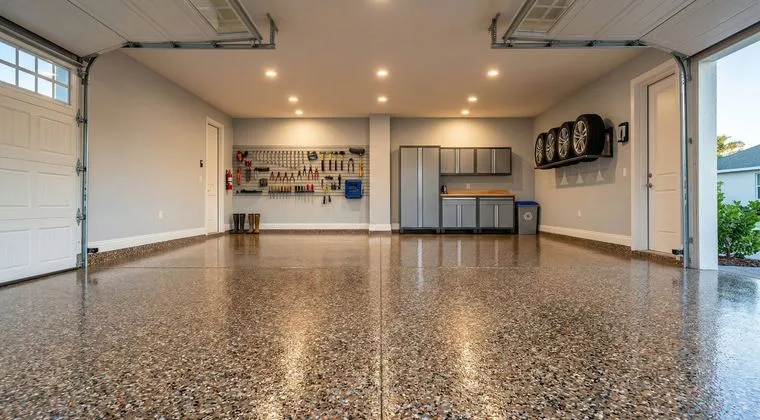
Here's the good news up front: a professionally installed epoxy floor is one of the lowest-maintenance surfaces you can own. There's no grout to scrub, no wax to strip and reapply, no sealer to fuss over every season. For most San Antonio homeowners, a soft broom or dust-mop plus an occasional damp mop with a pH-neutral cleaner is roughly ninety percent of the entire job. Do that and your floor keeps its gloss for years.
The other ten percent is where local conditions come in. San Antonio adds two wrinkles a lot of generic care guides ignore: grit and heat. Tracked-in caliche and clay dust are abrasive, and our long, hot summers mean hot tires and intense sun on outdoor floors. None of it is hard to manage, but it does change what you sweep, how often, and what you never want to pour on the coating.
This guide covers the simple weekly routine, the short list of products to avoid, the San Antonio-specific habits worth building, how to handle the stains you'll actually run into, and when a fresh topcoat or a call to a pro makes sense. Whether your floor is a garage system, a living-space install, or a commercial floor, the fundamentals are the same.
The Low-Maintenance Routine
The whole point of epoxy is that the routine is short and forgiving. There's no special technique to learn — just a few habits, done consistently, that keep grit and spills from working against the coating.
Daily to weekly: dust-mop or soft-broom
This is the single most important thing you'll do. Loose grit — sand, caliche dust, the fine clay that blows in off San Antonio yards and driveways — is the number-one source of abrasion on an epoxy floor. Every time you walk on it or roll a tire over it, that grit acts like sandpaper against the topcoat. A soft-bristle push broom or a microfiber dust-mop pulls it off in a couple of minutes. In a busy garage or entry, doing this a few times a week is worth more than any cleaner you can buy.
Monthly: damp mop with a pH-neutral cleaner
Once the loose grit is gone, a damp mop brings back the shine. Mix a pH-neutral floor cleaner with warm water, mop, and let it air-dry. You don't need a heavy concentration — epoxy doesn't hold dirt the way porous concrete does, so a light pass is plenty. For larger floors a microfiber flat mop covers ground fast and leaves less standing water behind, which matters with our hard water (more on that below).
Anytime: wipe spills promptly
Epoxy is non-porous, so spills sit on top instead of soaking in — which is exactly why you have a few minutes to deal with them. Oil, brake fluid, paint, a dropped soda: wipe it up while it's fresh and there's usually no trace left. The longer something sits, especially in summer heat, the more likely it is to leave a faint shadow you'll have to work at later.
Garages: hose and squeegee
For a garage floor, the fastest deep-clean is a garden hose and a rubber-bladed squeegee. Rinse the floor, push the water toward the door, and let the rest evaporate. This clears road salt, mud, and the gritty film that builds up over a season far quicker than mopping. Just keep the hose at normal pressure — there's no need to blast it.
What NOT to Use
The fastest way to ruin an otherwise bulletproof floor is reaching for the wrong product. The topcoat is a clear, protective wear layer, and a handful of common household cleaners and tools quietly degrade it. Here's the short list to keep off your epoxy, and why each one is a problem.
| Avoid | Why It Harms the Coating |
|---|---|
| Acids and vinegar | Vinegar and acidic concrete or tile cleaners are mild acids that etch and dull the clear topcoat over time, leaving cloudy, low-gloss patches. |
| Citrus or ammonia degreasers at full strength | Strong, undiluted citrus and ammonia products can soften and discolor the finish. Diluted and rinsed they're occasionally fine, but full strength is asking for trouble. |
| Abrasive pads, steel wool, scouring powder | Anything gritty physically scratches the topcoat the same way tracked-in grit does — only faster. Use a soft mop, sponge, or soft-bristle brush instead. |
| Film-leaving soaps | Soaps that leave a residue build up into a slick film that makes the floor dangerously slippery, especially when wet, and dulls the look. A pH-neutral, no-residue cleaner avoids it. |
| Tight-nozzle pressure-washer blasting at edges | A concentrated high-pressure stream aimed at seams, cracks, or edges can drive under the coating and start peeling it. Wide fan, sensible distance, and never straight at an edge. |
If you remember nothing else from this section: no acid, nothing abrasive, and nothing that leaves a film. When in doubt, warm water with a little dish soap is safe on virtually any healthy epoxy floor.
San Antonio-Specific Care
The basic routine works anywhere. These are the extra habits that matter specifically here, where the soil, the water, and the summer all behave a certain way.
Caliche and clay dust: mat it and sweep it
This is the big one. The caliche and expansive clay that San Antonio sits on get tracked in from yards, driveways, and Hill Country roads as a fine, abrasive dust. Left on the floor and walked around, it's the leading avoidable cause of a dull, scratched topcoat. Two cheap fixes handle almost all of it: a good walk-off mat at every entry to catch grit before it lands on the epoxy, and dust-mopping more often than you think you need to. Homeowners in dustier areas like Boerne, Bulverde, and Fair Oaks Ranch especially benefit from sweeping a few times a week.
Texas heat and hot tires
Once epoxy is fully cured, San Antonio's summer heat won't soften the floor itself. The thing to watch is hot tires. Drive across town on a 100-degree afternoon and your tires come home hot and loaded with plasticizers that can pull at the coating and leave a mark — what installers call hot-tire pickup. A quality polyaspartic topcoat resists this well, and on a daily-driven garage a parking mat or tire pad under each wheel takes the risk off the table entirely.
Hard-water spotting
Bexar County water is hard, and that mineral content shows up as faint spots or a chalky film if mop water or hose water is left to dry on its own. The fix is simple: after damp-mopping or rinsing, pull the water off with a squeegee or microfiber and let it dry quickly rather than pooling. A quick dry pass after cleaning keeps the gloss even.
Patios and outdoor floors
Covered patios and other outdoor epoxy floors take on more than indoor ones — UV exposure from the Texas sun plus wind-blown dust and pollen. As long as the floor was built with a UV-stable topcoat, the sun is manageable, but outdoor surfaces simply collect more grit, so rinse them more often than you would a closed garage. A quick hose-down keeps abrasive debris from grinding in.
Floor Looking Tired? Let's Take a Look.
Whether it's a dull patch, a stubborn stain, or it's time for a fresh topcoat, we can assess your San Antonio floor and tell you honestly what it needs.
Removing Common Stains
Because epoxy is non-porous, most stains sit on the surface and come off with the gentlest method that works. Always start mild and only step up if you have to — and test any stronger cleaner in an out-of-the-way corner first.
Oil and grease
The most common garage stain, and usually the easiest. Wipe up the bulk, then scrub the spot with warm water and a little dish soap using a soft brush or pad. If a shadow remains, a mild, epoxy-safe degreaser will lift it — dilute it, work it in, and rinse well. Skip harsh acids and aggressive solvents; they're unnecessary and they attack the topcoat.
Tire marks and hot-tire pickup
Let the floor cool, then work a gentle citrus-based cleaner into the mark with a soft brush or pad and rinse. Hot-tire marks often need a couple of patient passes rather than more force — resist the urge to grab steel wool or scouring powder, which will scratch the finish worse than the mark ever did.
Rust
Rust from a tool, a metal shelf foot, or patio furniture can be lifted with a specialty rust remover — but use it sparingly and test a hidden spot first, since many rust removers are acidic. Apply the smallest amount that works, keep it off the surrounding coating, and rinse thoroughly the moment the stain releases.
Paint and adhesive
Dried paint, caulk, or sticker adhesive usually pops off with a plastic scraper or an old credit card. Never use a metal scraper or razor — it will gouge the topcoat. Warm water or a dab of a mild, epoxy-safe solvent softens stubborn adhesive enough to scrape it gently.
Protecting and Recoating
It helps to picture an epoxy floor as layers: the prepped slab, the color and flake coats that give it the look, and the clear topcoat on top. That topcoat is the part that takes the wear — the foot traffic, the tires, the grit. It's designed to be sacrificial so the color underneath stays protected.
On a typical San Antonio residential floor, that topcoat holds its gloss for somewhere around seven to ten years before it's worth refreshing. Heavy-traffic garages, home shops, and floors that see hot tires every day will wear faster and may want a recoat sooner. When the shine starts to flatten across the whole floor — not a single scuff, but a general dullness — that's the signal.
The good news is that recoating is straightforward and far cheaper than starting over. A pro scuff-sands the existing surface so the new coat grips, then applies a fresh compatible topcoat, and the floor comes back looking close to new for a fraction of a full tear-out. Recoating on schedule is what lets a well-built epoxy floor last decades rather than years.
When to Call a Pro
Day-to-day care is yours to handle. A few situations, though, are signs the coating or the slab needs a professional eye before they get worse.
- Peeling or delamination — any spot where the coating is lifting or flaking off the concrete. This won't fix itself and usually points to a prep or moisture issue underneath.
- Deep cracks following the slab joints — hairline surface marks are cosmetic, but cracks that track along the slab's control joints can mean movement in the concrete, common on San Antonio's expansive clay.
- Widespread dulling — when the whole floor has lost its gloss rather than one worn path, it's time for a recoat, not more scrubbing.
- Hot-tire lift — if the coating is actually pulling up where tires sit, the topcoat is failing there and needs to be addressed.
- Before any recoat — proper recoating means scuff-sanding and a compatible product. The wrong product or skipped prep won't bond, so it's worth having a pro handle it.
If you're seeing any of these on a floor across San Antonio, Bexar County, or the surrounding Hill Country towns like Schertz, Helotes, New Braunfels, or Stone Oak, it's worth a quick assessment. We can tell you whether it's a simple recoat or something in the slab that needs attention first.
Frequently Asked Questions
How do I clean an epoxy garage floor in San Antonio?
Dust-mop or soft-broom it often to pull off the tracked-in caliche and clay grit that scratches the topcoat, then damp-mop about once a month with a pH-neutral cleaner and warm water. Wipe spills when they happen, and for a garage you can hose it down and squeegee the water out toward the door. That routine handles roughly ninety percent of San Antonio epoxy care.
Can I use vinegar on an epoxy floor?
No. Vinegar is a mild acid, and over time it etches and dulls the clear topcoat that protects the color and flake underneath. The same goes for citrus acid cleaners and any acidic concrete or tile product. Stick with a pH-neutral cleaner; if a spot needs more muscle, use warm water and a little dish soap, not acid.
How do I get hot-tire marks off my epoxy floor?
Let the floor and tires cool first, then work a gentle citrus-based cleaner into the mark with a soft brush or pad and rinse. Most hot-tire marks lift with a little patience and repeat passes. Do not reach for acid, steel wool, or a scouring powder, which will scratch the finish. Parking on a mat and letting tires cool after a Texas summer drive prevents most of it.
How often should I reseal or recoat an epoxy floor?
The topcoat is the wear layer, and on a typical San Antonio residential floor it lasts about seven to ten years before a fresh recoat restores the gloss. Heavy-traffic garages, shops, and floors that see hot tires daily may want a recoat sooner. A new topcoat is far cheaper than tearing everything out and starting over, so recoating on schedule protects the whole system.
Does caliche or clay dust really hurt my epoxy floor?
Yes, indirectly. Caliche and clay dust tracked in from San Antonio yards and driveways are abrasive and act like fine sandpaper underfoot and under tires, slowly grinding the gloss off the topcoat. The dust itself will not eat the coating, but leaving it there and walking it around is the single biggest avoidable cause of dulling. A mat at the door and frequent dust-mopping fixes it.
Can I pressure-wash my epoxy floor?
Light pressure washing at a wide fan from a sensible distance is fine on a healthy floor, but avoid blasting a tight, high-pressure nozzle straight at edges, seams, cracks, or any spot where the coating already looks lifted. Concentrated pressure at an edge can get under the coating and peel it. For most floors a hose and squeegee, or a damp mop, is all you need.
Related Articles
How Long Does an Epoxy Floor Last in San Antonio?
What realistic lifespan looks like here, and the local factors that make a floor last decades or fail early.
Why Epoxy Floors Fail in San Antonio (and How to Avoid It)
The prep, moisture, and product mistakes behind peeling floors — and what a proper install does differently.
How Much Does Epoxy Flooring Cost in San Antonio?
Honest 2026 pricing by system type, garage size, and the local prep factors that move the number.